
Geography
Almost everything that is strange and good about the Maldives follows from its geography. This is a country that is 99% sea, built entirely on coral, with no hill anywhere in it.
Understanding atolls
The Maldives is made up of 26 natural atolls containing roughly 1,192 coral islands. An atoll is a ring-shaped coral reef enclosing a lagoon, and each one began as a volcano.
As those ancient volcanoes subsided beneath the Indian Ocean, coral grew upward on their rims, keeping pace with the sinking rock. The mountain eventually disappeared entirely and the reef remained — a ring of living coral around a shallow turquoise lagoon where a peak used to be.
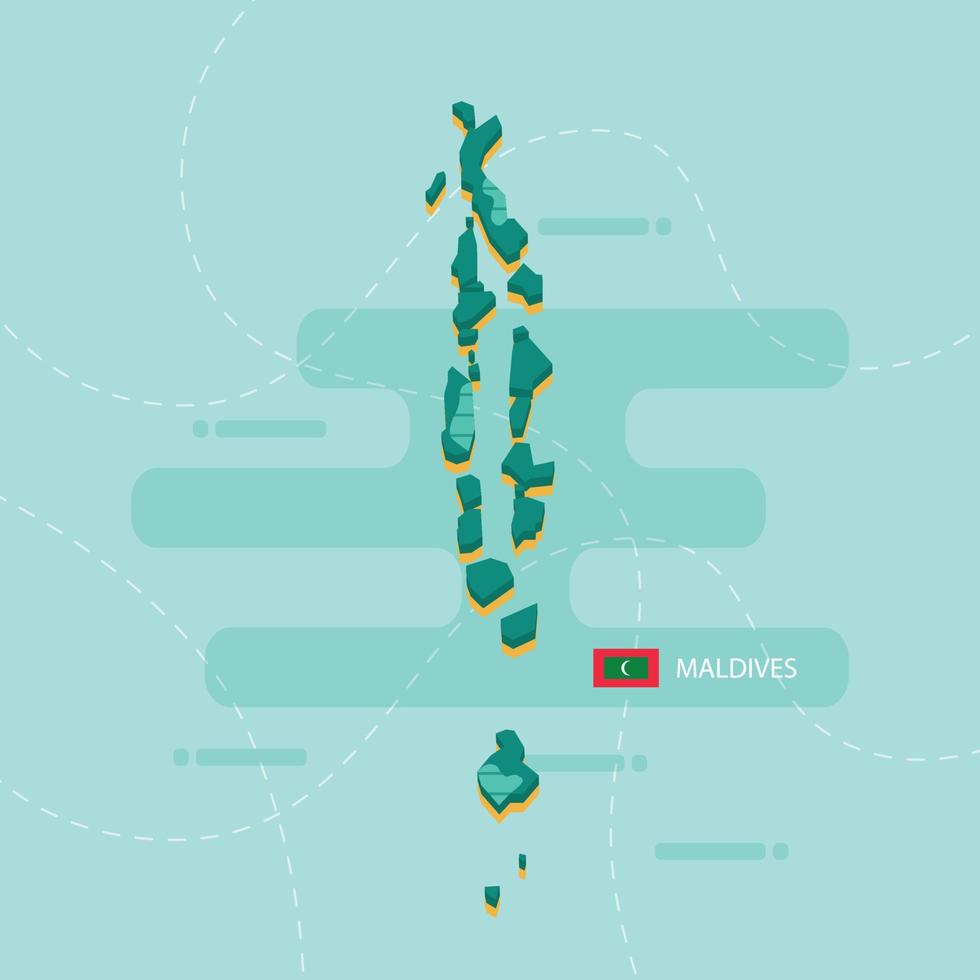
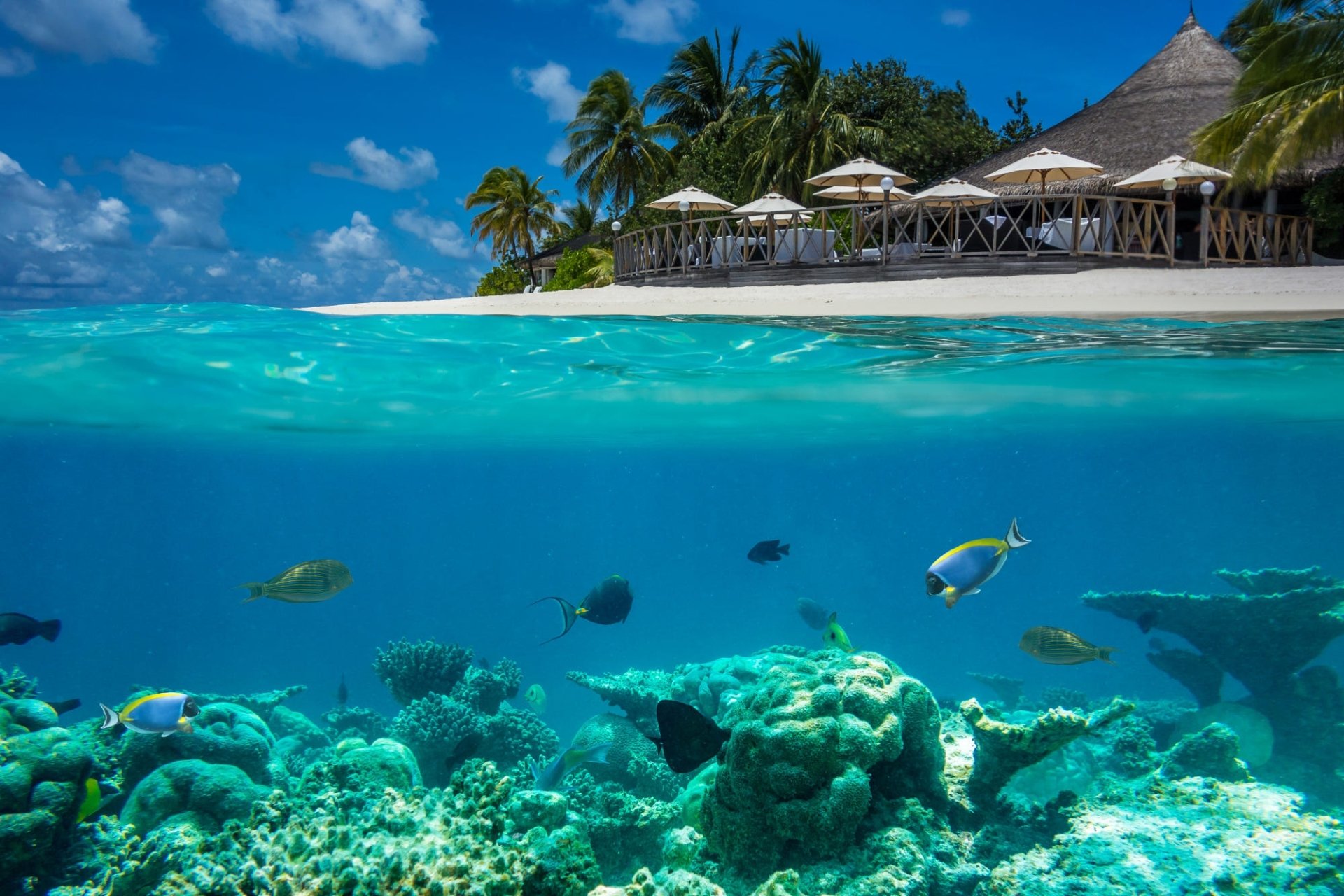
The chain runs north to south in two parallel rows of atolls, which is why a domestic flight can take longer than the international one that got you here.
Where it actually is
The Maldives sits in open ocean 750 km south-west of India and 400 km south-west of Sri Lanka, straddling the equator. The archipelago stretches about 823 km from its northernmost atoll to its southernmost — further than the length of Great Britain — across territory that is almost entirely water.
It all sits on the Chagos-Laccadive Ridge, an extinct volcanic mountain range running down the floor of the Indian Ocean. The atolls are its summits.
The lowest country on earth
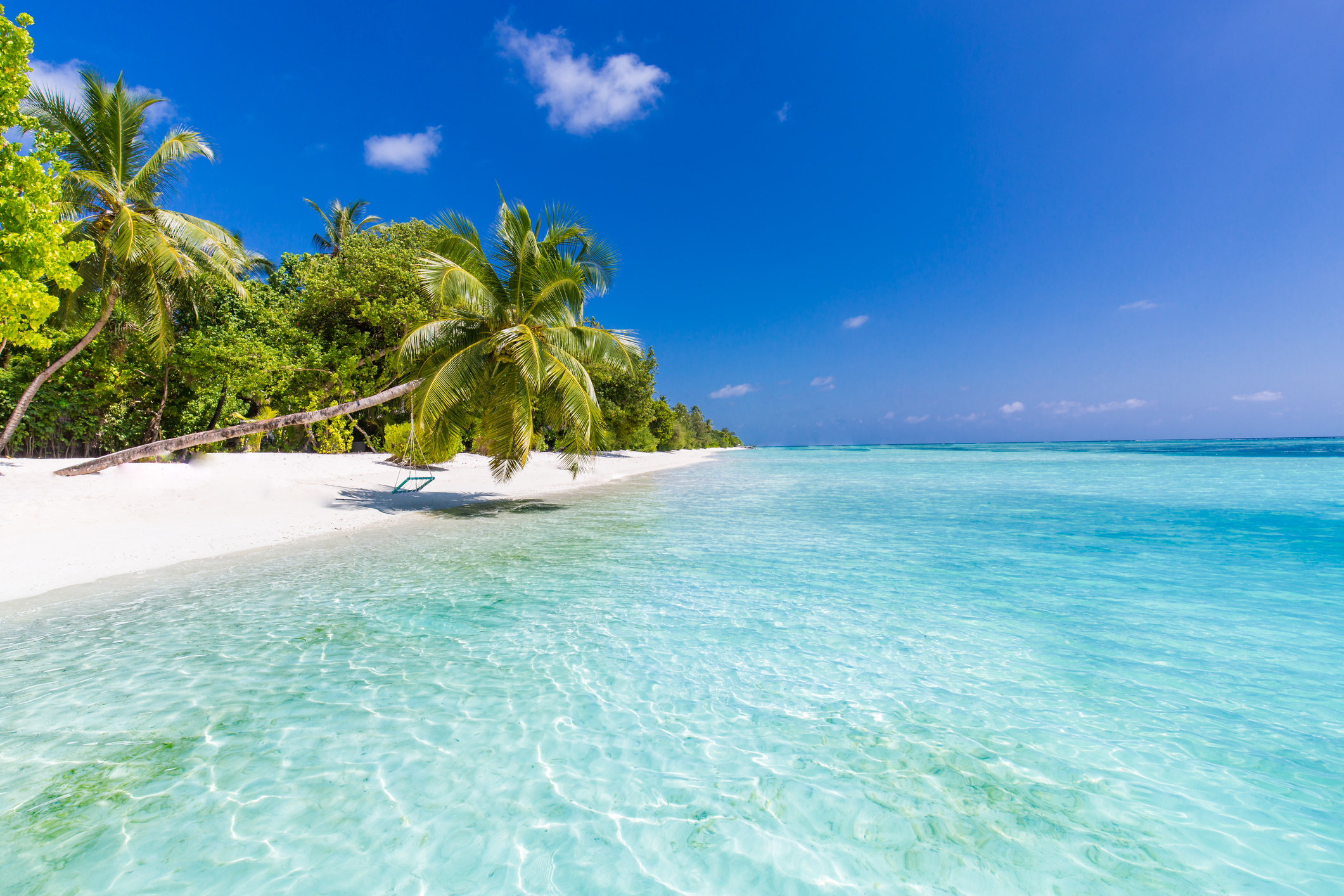
Average elevation is about 1.5 metres above sea level and the highest natural point in the entire country is roughly 2.4 metres. Nowhere else is flatter.
In practice this is why the islands feel the way they do: you are never more than a couple of hundred metres from water, the horizon is always visible, and the lagoon shelves so gently that you can walk out a long way before it reaches your waist. It is also why coral health and sea level are not abstract topics here — the reef is the land’s foundation and its sea defence at the same time.
People and culture
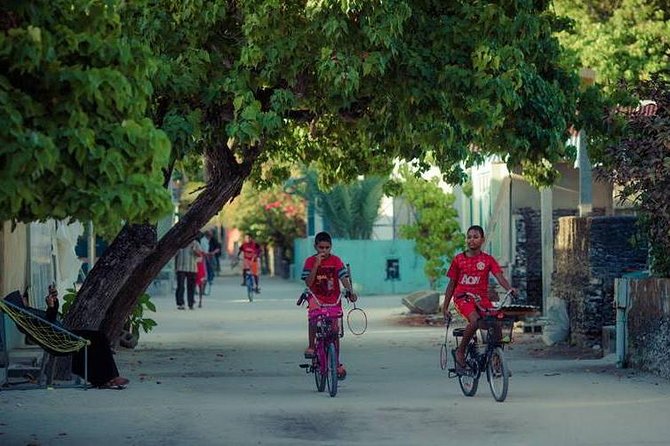
Tourism is arranged so that you can visit the Maldives without meeting it. That is a shame, and easily fixed — a day on an inhabited island is the cheapest and most interesting thing you can do here.
The Maldivian people
Around 515,000 people live here, principally of Indo-Aryan descent with Arab, African and South-East Asian ancestry layered in by a thousand years of trade across the Indian Ocean. Family sits at the centre of things, and hospitality is offered quickly and without ceremony.
The language is Dhivehi, written in Thaana — a script that runs right to left and is used nowhere else on earth. English is widely spoken, near-universally in tourism and among younger Maldivians, so you will not struggle. A few words still go a long way.
Islam
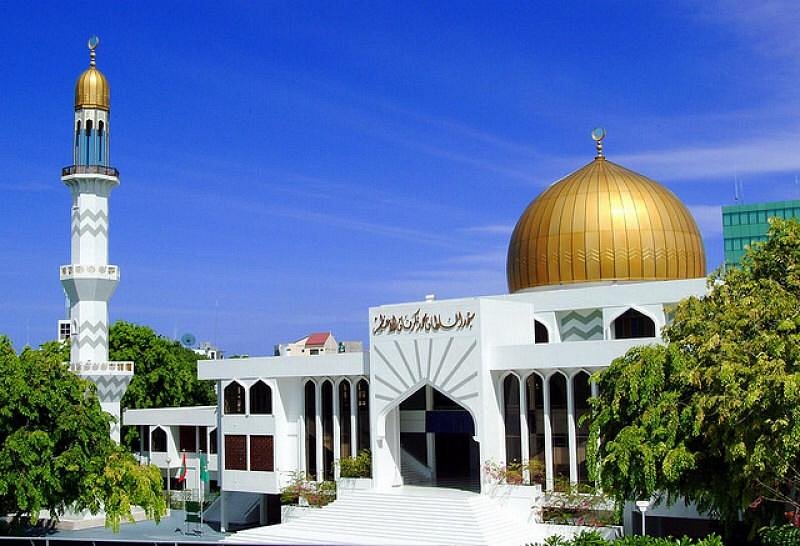
The Maldives is a Sunni Muslim country, and has been since its conversion in 1153 AD. Islam is the state religion and citizenship is tied to it. Daily life on inhabited islands runs to the rhythm of the five prayers — shops and cafes close for ten or fifteen minutes after each call, then reopen as if nothing happened.
On a resort island you will notice none of this. On a local island it shapes the day, and a little awareness of it is the difference between being a guest and being an inconvenience — see rules and etiquette below.
Music, food and craft
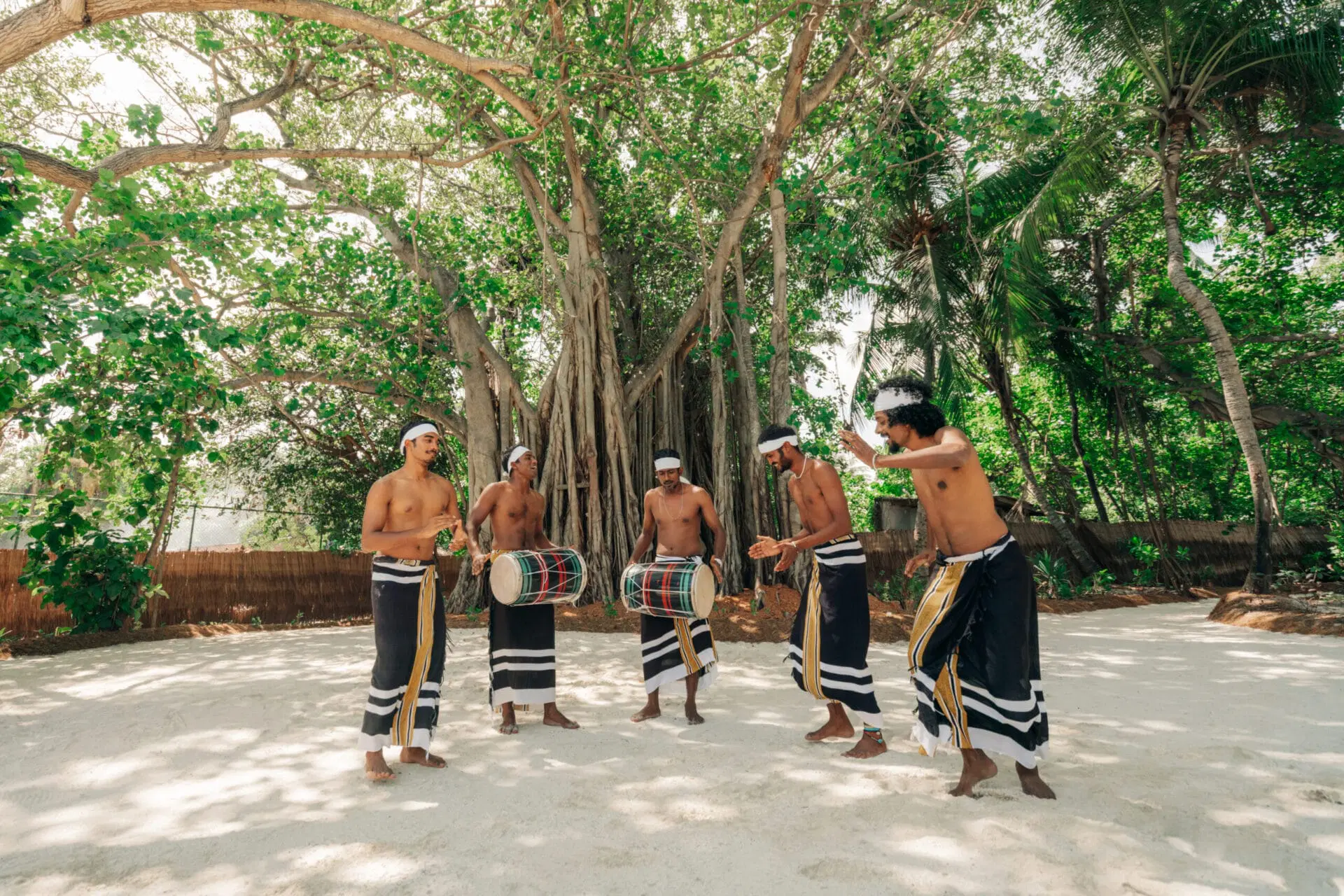
Maldivian culture is a sea culture: the food comes out of the water, the music was made on boats and beaches, and the crafts use what washes up or grows on the island.
Tea shops are the other thing to do. Every inhabited island has one, they are cheap, the short eats are excellent, and nobody will mind you sitting there for an hour.
When to come
There are two seasons and the difference is not subtle. The dry north-east monsoon runs roughly December to April: flat water, reliable sun, visibility past thirty metres, and the highest prices of the year. The wet south-west monsoon runs May to November: shorter heavy downpours rather than all-day rain, choppier crossings, and prices that can drop by a third.
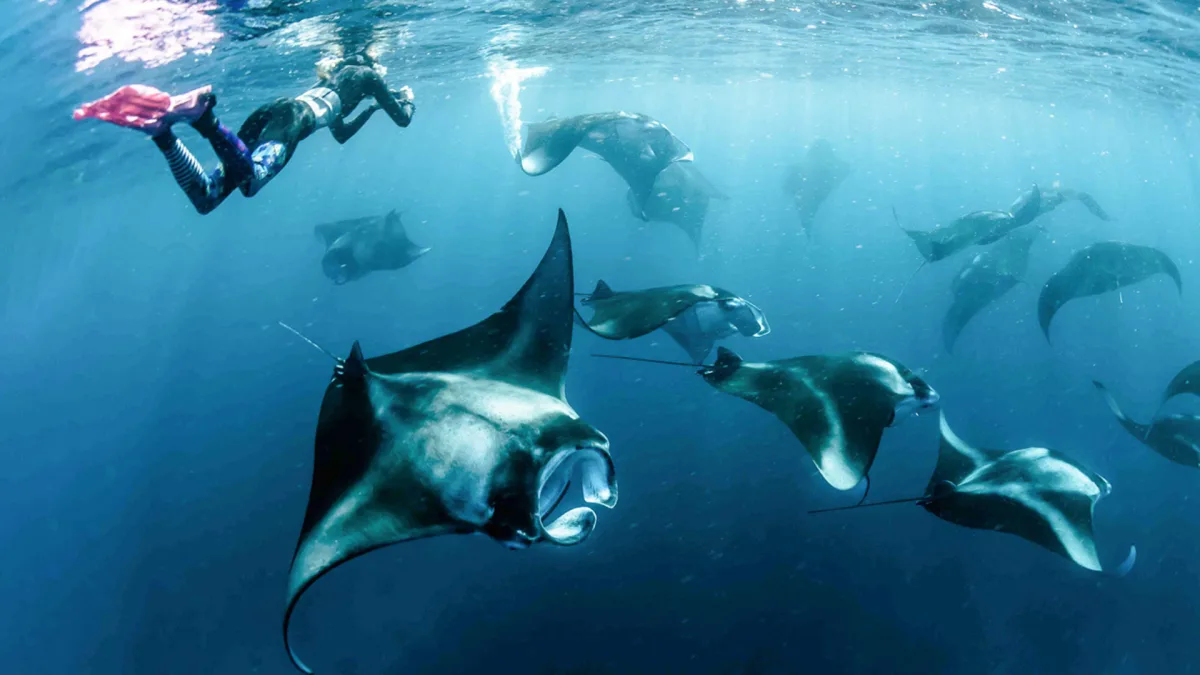
The catch is that the wet season is when the big animals turn up. Plankton blooms bring manta rays into Hanifaru Bay in Baa Atoll between June and November, and whale sharks are more reliable in the south of Ari in the same window.
If this is your first trip and you want the postcard, come in February. If you have been before, or you dive, come in September and spend the difference on a better villa.
Resort or local island
This is the decision that sets your budget, and most people make it without knowing there is a choice. A resort island is one island, one hotel, and nobody else on it. A local island is an inhabited Maldivian island where guesthouses operate alongside ordinary life — a school, a mosque, a football pitch, boats going out at four in the morning.
The reef does not care which you choose. A good guesthouse puts you on water every bit as good as a resort three times the price — you just walk to the boat instead of being carried to it, and there is no bar.
Plenty of people do both in one trip: three nights on a local island, three on a resort. It costs less than a week of resort and you see considerably more of the country.
Transfers, properly explained
There is one international airport, Velana, on an island next to Male’. Everything else in the country is reached by boat or small plane, and that leg is a real cost that a lot of booking sites leave until checkout.
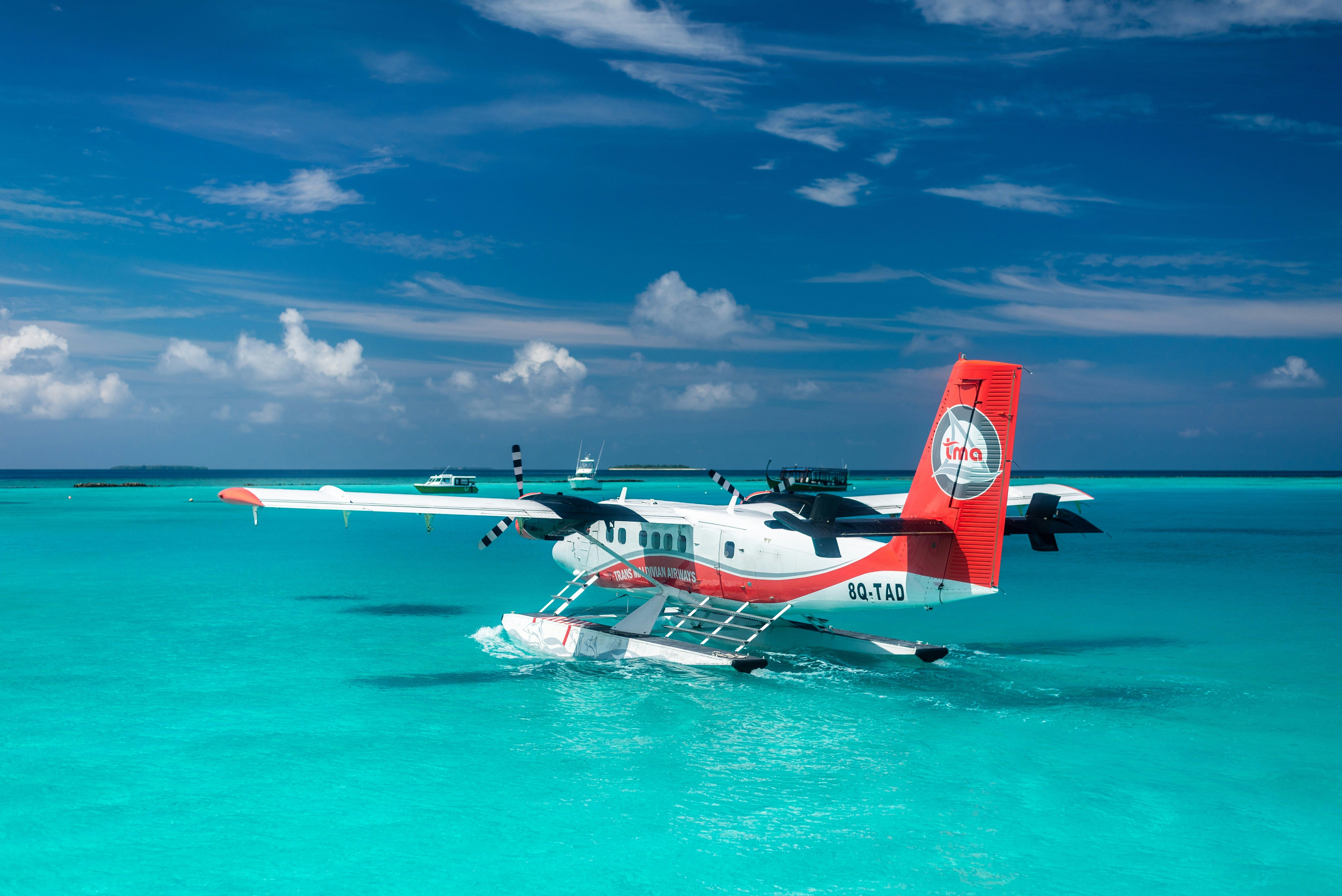
Seaplanes are the expensive, memorable option — a twin-engine Twin Otter, no assigned seats, pilots often barefoot, flying at about five hundred metres. They only fly in daylight. If your inbound lands after roughly four in the afternoon, you will not reach the island that day, and you need a night near the airport.
The single most common way a Maldives trip goes wrong is an evening arrival booked against a seaplane transfer. Check the flight time before you book the island.
What things cost
Resort extras are where budgets go wrong. A half-board rate does not include drinks, and soft drinks are charged like wine. Rough figures, per person, at a mid-range resort:
Most resorts add a 10% service charge and 16% GST on top of quoted prices. Our package totals already include both.
In the water
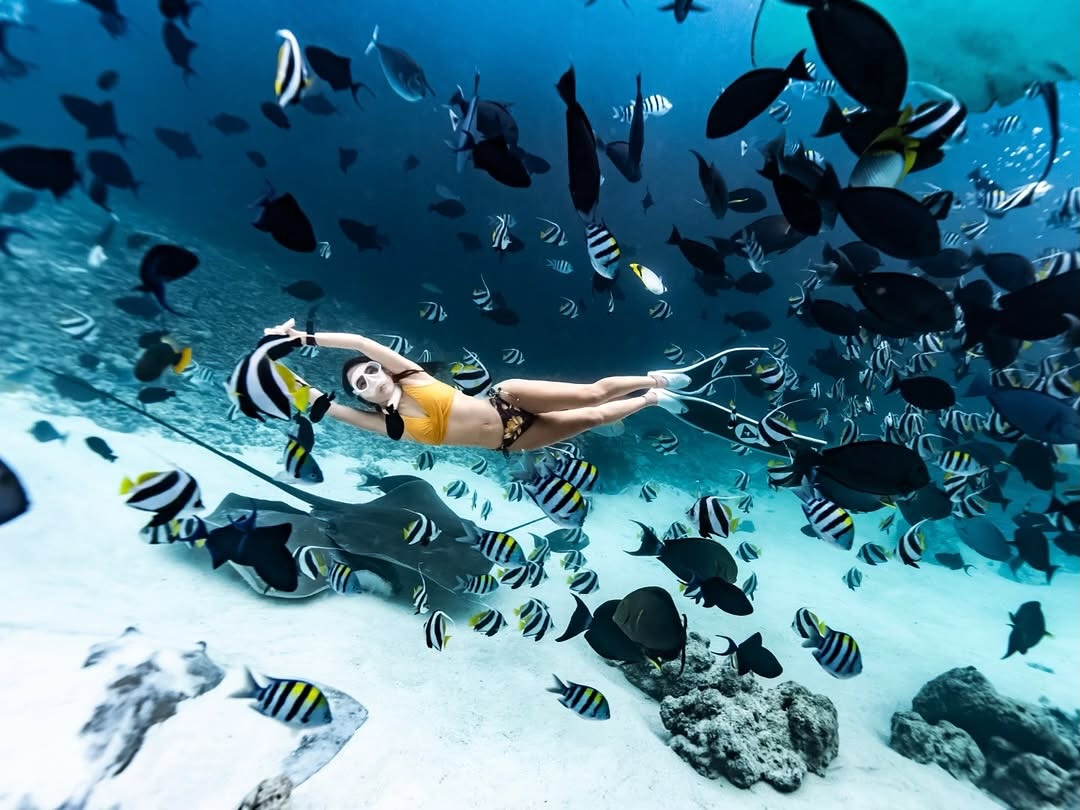
You do not need to dive. A mask and a pair of fins over a good house reef will show you most of what people come here for — reef sharks, turtles, rays, and several hundred species of fish that do not much mind you being there.
If you do dive, the channels are the draw: fast water, big schools, and grey reef sharks holding in the current. Vaavu and the southern atolls are where the serious diving is. Hanifaru in Baa is snorkel-only by law and worth planning a trip around.
Bring your own mask if you are particular about fit. Loan gear is usually adequate and occasionally awful, and a leaking mask ruins a morning.
Rules and etiquette
The Maldives is a Muslim country and the rules on inhabited islands are real, not advisory. None of it is onerous — it is mostly a matter of knowing before you arrive.
Alcohol
Legal only on resort islands and licensed liveaboards. It cannot be brought into the country — bags are scanned on arrival and bottles are confiscated.
Swimwear
Anything goes on a resort island. On a local island, swimwear is for the designated bikini beach; shoulders and knees covered elsewhere.
Ramadan
Resorts run normally. On local islands, cafés close during daylight hours and it is poor form to eat or drink in the street. Worth avoiding if a local island is your plan.
What to pack
Less than you think, with four exceptions. Note the seaplane baggage limit — 20 kg checked and 5 kg hand, and it is enforced.